
How Do I Sell an Inherited House in Arizona?
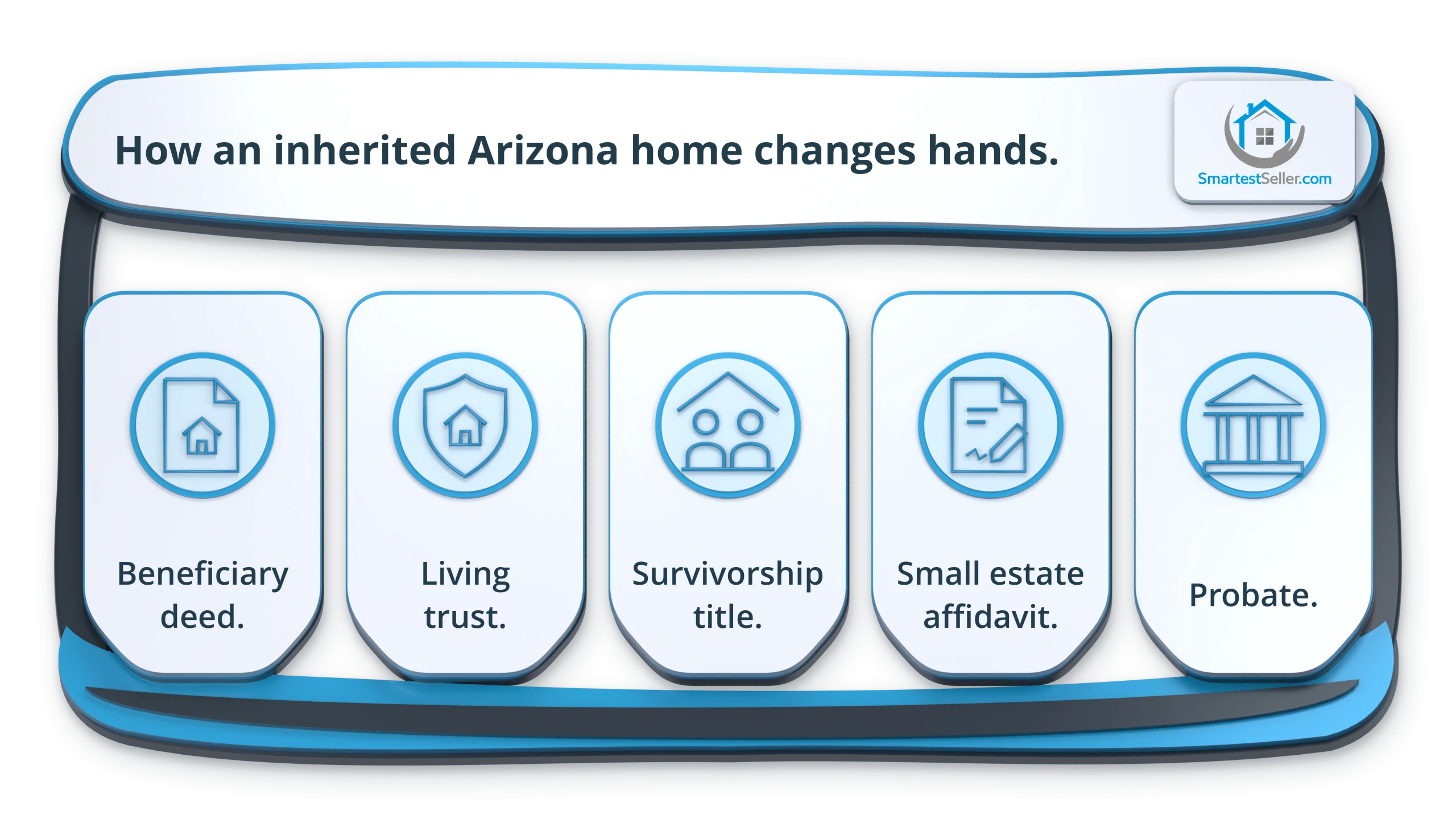
The order of operations is the same for most families. First, figure out how the home passes: by deed, trust, survivorship, affidavit, or probate. Second, get the person with signing authority in place. Third, secure the house, keep it insured, and stay current on taxes and any loan. Fourth, decide how to sell. The title company will confirm who must sign and what documents it needs before closing.
You do not have to clean out, repair, or update the house first. Many inherited homes have been lived in for decades and need work. You can sell as-is with the contents still inside, or choose a path that improves the home before it sells.
Do I Need Probate to Sell an Inherited House in Arizona?
| How the home passes | Who signs the sale | Probate needed? | Typical speed |
|---|---|---|---|
| Beneficiary deed recorded | The named beneficiary, after recording proof of death | No | Usually the fastest path |
| Revocable living trust | The successor trustee | No | Fast, once the trustee is in place |
| Joint tenancy or community property with right of survivorship | The surviving owner, after recording proof of death | No | Fast |
| Small estate affidavit for real property | The successor named in the affidavit | No, but there is a waiting period after death | Moderate |
| Probate | The court-appointed personal representative | Yes | Longest, though informal probate can move quickly |
Often, no. Arizona offers several ways for a home to pass without a full probate. A beneficiary deed under A.R.S. § 33-405 transfers the home to the named beneficiary at death once proof of death is recorded. A home titled in a revocable living trust is sold by the successor trustee. A home held as joint tenants or as community property with right of survivorship passes to the surviving owner.
Smaller estates may qualify for an affidavit. A.R.S. § 14-3971 allows real property to pass by an affidavit of succession when the estate falls under the statute’s value limit and a set waiting period has passed since the death. Arizona raised these limits in 2025, so families who were told years ago that they needed probate may want to check again. If none of these apply, the estate goes through probate in the Superior Court for the county where the person lived.
How Long Does Probate Take in Arizona?
Arizona probate is usually faster than people expect. Most estates use informal probate, where a personal representative can be appointed without a court hearing if there is no dispute. Formal probate, with hearings, is used when there is a contested will, an unclear heir, or another dispute, and it takes longer.
The estate stays open while debts and claims are handled. Creditors get a set period to make claims after notice is given, and the personal representative has to inventory assets and pay valid debts before distributing what is left. The house can often be sold during that time, which is usually the main asset that pays those costs.
Can I Sell a House During Probate in Arizona?
Usually, yes. Once the court issues letters to the personal representative, that person can typically sign for the estate. In many Arizona estates the personal representative can sell the home without separate court approval, but the letters and any restrictions the court sets control, and the title company will confirm what it needs. If a will names someone to receive the house specifically, or heirs object, the attorney handling the estate will guide the process.
What Taxes Do I Pay When I Sell an Inherited House?
Arizona does not have a state inheritance tax or estate tax. For federal income tax, inherited property generally receives a stepped-up basis, meaning its tax basis is usually its fair market value on the date of death rather than what the original owner paid. If you sell soon after inheriting, the gain is often small, but every situation is different.
This section is general information, not tax or legal advice. Please talk with a CPA or tax professional about your situation, and with an Arizona probate attorney about questions of authority, heirs, or the will.
What If Siblings or Other Heirs Disagree About Selling?

Disagreements are common and usually solvable. One heir may want to keep the house, another may need the money, and someone may live out of state. Options include one heir buying out the others, renting the home for a period, or selling and splitting the proceeds. When co-owners cannot agree, a court can order a partition, but that is slow and expensive for everyone. An independent offer and a realistic listing estimate often help families agree on what the house is actually worth.
What If the Inherited House Has a Mortgage or Liens?
The loan does not disappear, but it does not have to be paid off immediately either. Federal law generally keeps a lender from calling the loan due just because the home passed to a relative after death, so heirs can keep making payments while they decide. When the house sells, the mortgage, any reverse mortgage, unpaid property taxes, and other liens are paid from the proceeds through escrow. If payments have stopped, act quickly, because a trustee sale can proceed even while the estate is being settled.
Can I Sell an Inherited House That Has a Reverse Mortgage?
Yes, and timing matters. A reverse mortgage generally becomes due when the last borrower passes away, and the servicer will contact the estate about repaying it. Heirs can usually pay it off, sell the home, or hand it back. Most reverse mortgages are non-recourse, so if the home is worth less than the loan balance, heirs are generally not required to pay the difference out of pocket. Contact the servicer early, ask for the payoff and the deadlines in writing, and keep them updated if a sale is in progress.
What Do I Do With the Belongings in an Inherited House?

Take what matters, then decide how much effort the rest is worth. Families often set aside photos, papers, and keepsakes first, then use an estate sale company, donations, or a cleanout service for the remainder. If you sell to us directly, you can leave whatever you do not want and we take care of it after closing, which spares out-of-town heirs repeated trips to the house.
Should I Sell, Rent, or Keep an Inherited House?
It depends on the house, the family, and the numbers. Keeping or renting can make sense if the home is in good shape and someone can manage it. Selling makes sense when no one wants the upkeep, the heirs live elsewhere, or the house needs work no one wants to fund. Selling as-is is the simplest exit. For a good house that needs updates, a renovation-backed retail sale can bring a stronger price without the family paying for repairs, and a top local agent can be the right fit for a move-in ready home. Our goal is to understand your goal and align with it.
A Few Inherited Homes We Have Helped Families Sell
Every family’s situation is different, but the questions are usually the same. Here are a few of our recent inherited home transactions in Arizona. Names and addresses are left out to protect each family’s privacy.

Inherited home in probate
Avondale, Arizona
The seller had inherited a home that had to go through probate first. We gave them a few probate attorneys to choose from, and our transaction coordinator walked them through each step until the home was ready to close through escrow.
Inherited from out of town
Prescott, Arizona
She inherited this 2-bed, 2-bath home, built in 1989, while living in Flagstaff, and knew very little about its condition. It had sat vacant and needed a full update. Partway through the sale, mold turned up that no one had known about. We kept our word and closed anyway, so she never had to manage repairs from another city.
Inherited house and shop
Fort Mohave, Arizona
The seller inherited a house and a large shop sitting on two neighboring lots in Fort Mohave, and wanted everything sold as quickly as possible. The property only needed cleaning out, and we bought both lots in a single transaction.
What Should I Do First After Inheriting a House in Arizona?
1. Secure the house. Change the locks if needed, keep utilities on, and tell the insurance company the owner has passed, because vacant homes may need different coverage. 2. Find the paperwork. Look for a will, trust documents, the deed, and any recorded beneficiary deed. 3. Keep paying what keeps the house safe: property taxes, insurance, HOA dues, and the loan if there is one. 4. Talk to a probate attorney if probate may be needed or heirs disagree. 5. Learn what the house is worth as-is, after updates, and on the open market, so the family can decide together.
Where Do You Buy Inherited Houses in Arizona?
We help families with inherited homes across Arizona, including Phoenix, Mesa, Scottsdale, Glendale, Peoria, Avondale, Prescott, Tucson, and rural Mohave County. Read our guide to selling a house in Arizona.
Ready to See Your Options?
Tell us about the inherited house below or call (602) 428-9339. Know your selling options. Be the Smartest Seller.
One More Step to Get Your Cash Offer…
Please tell us where to send your offer.